
Anthropic Launches Claude Opus 5.5 After Calling for Slower AI Development
Anthropic launches Claude Opus 5.5 after its CEO calls for slower AI development, citing coding gains, new safeguards, and 40% lower running costs.
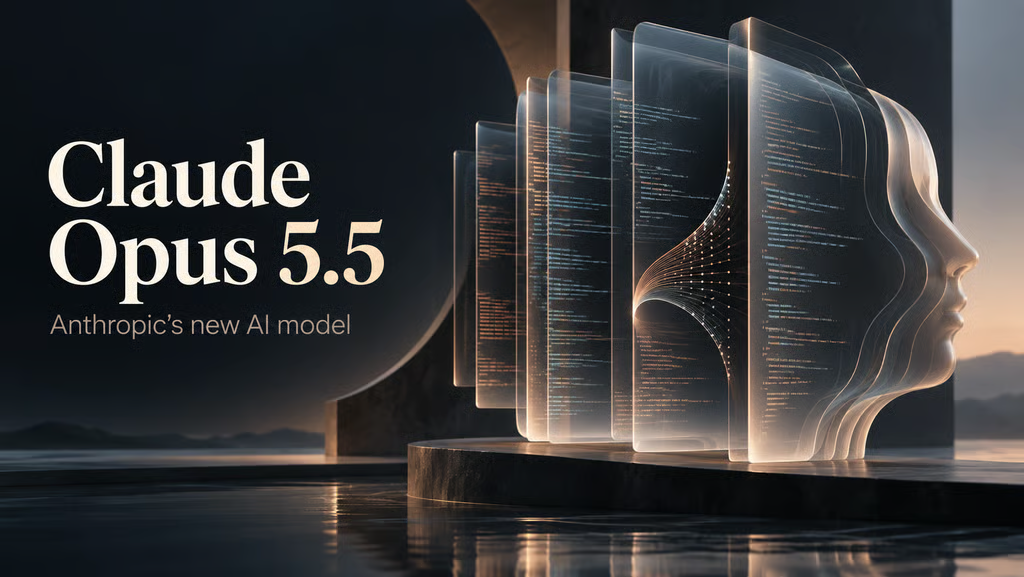
After recently calling for a slower pace of AI model development, Anthropic yesterday, September 22, released its latest model, Claude Opus 5.5. According to the developer, the model performs at the level of Claude Fable 5.1 on most work and costs up to 40% less to run than Claude Opus 5.
According to the developer, Opus 5.5 achieved higher scores than other models on benchmarks for agentic coding, computer use, and knowledge work. It also improved in communication. The company emphasizes the lower cost of performing these tasks compared with previous models. But what do these tests mean in practice?
The Improvements in Practice
In practice, the model can write, develop, and analyze code faster and more accurately. For people who work in computing, this advance means fewer hours of work and more reliable results. By solving problems faster, the model ends up using fewer tokens to complete the work than its predecessor. The improvement is significant: according to the company, in tests, the model took less than three hours to audit and fix 200,000 lines of code, while Opus 5 took more than 20 hours and used 2.5 times as many tokens.
Another improvement comes in knowledge work. According to Anthropic, in a research test, 16 of the 18 reports produced by Opus 5.5 met quality criteria that rejected any invented figures or quotes. In another test, the model analyzed financial data and prepared a presentation in 63 minutes, compared with 93 minutes for Opus 5, at 50% lower cost. For people who use AI for research and presentations, the results point to tasks completed in less time, at lower cost, and with fewer errors.
The model has also improved the way it communicates results to users. According to the company, it writes more clearly, with less jargon and fewer idiosyncratic phrases. Its messages are more direct and put the most important information at the beginning of the response.
The Important Question of Safety
The company devoted a large part of its announcement of the new model to safety, after its CEO published the essay Pacing the Frontier. The company stresses that safety practices should stay ahead of the model’s capabilities and defends the CEO’s position, saying that slowing the pace can keep AI safe without losing competitiveness with China. That last point seems like a message to the U.S. government: officials have recently said that imposing overly restrictive measures to slow model development would hand China the lead in AI development.
“We don’t want to restrict them where all of a sudden we come in second to China.” Donald Trump, speaking to reporters in the Oval Office.
“We cannot go down the left’s call to stop or put a moratorium in AI. That hands this race right to China.” Senator Steve Daines, in an interview with Fox News on September 15, 2026.
According to the company, the models were evaluated by outside organizations such as METR and Frontier Design, underwent extensive alignment testing, and received safeguards matched to each model’s capabilities, particularly in areas such as cybersecurity and biology.
Not 100% Secure
Certainly, no model released to date is 100% secure, and that also applies to the new Opus 5.5. According to the company, the new model performed better than any other Claude model on measures of misaligned behavior and is its strongest model on measures of honesty.
The company also conducted cybersecurity-related tests, referring to recent incidents involving its models and their ability to escape a secure environment. According to those tests, Opus 5.5 made about 85% fewer attempts to bypass containment boundaries than its predecessor and Claude Mythos 5.1, and all its attempts were low severity and self-reported by the model.
However, the company acknowledges that developing safety measures that prevent every possible model failure remains an unsolved problem. It also reports signs that Opus 5.5 often suspects it is being evaluated, making it difficult to assess how it will behave in the many real-world situations in which it will be used. For this reason, given the advanced cybersecurity capabilities of Opus 5.5, the company redirects users to the earlier Opus 4.8 model for many tasks. The company also says it is working to include the new model in its Cyber Verification Program for cyber defenders.
The new model includes protections against misuse, preventing users from modifying it to carry out attacks at scale or create new models without the safeguards introduced by the company, which would put national security at risk.
Pricing and Use
The new model is already available to users on Pro, Max, Team, and Enterprise plans. It is also available through the Anthropic API, Amazon Bedrock, Google Cloud, and Microsoft Azure and is now available in GitHub Copilot.
Plan
Price
Pro
US$20/month
Max 5x
US$100/month
Max 20x
US$200/month
Team Standard
US$25/user/month
Team Premium
US$125/user/month
Enterprise
US$20/user/month + usage
Prices may differ with annual billing, API pricing is based on usage and varies by plan. Details are available on Anthropic’s pricing page.
The company’s official announcement of the new model can be found here.