The Name Changed From AI to Super Intelligence. The Rules Didn’t
The U.S. government has replaced “Artificial Intelligence” with “Super Intelligence.” Here’s what actually changes, why it matters, and what comes next.
The U.S. federal government has officially changed the name from Artificial Intelligence to Super Intelligence. In an executive order issued on September 29, the government directed that the terms AI and Artificial Intelligence no longer be used, to the extent permitted by law, in official correspondence, public communications, websites, reports, policy documents, and other nonstatutory documents within the federal executive branch. Despite the change in terminology, the definition remains the same. So what actually changes, and why change the name?
What Actually Changes
For now, the main change is in the terminology. In the contexts listed above, the federal executive branch will use the terms Super Intelligence and SI. The change is not retroactive: previously issued regulations, presidential actions, contracts, grants, and other historical documents do not need to be amended.
According to the executive order and subsequent official statements, the change in terminology is part of a broader reorganization of how the federal government intends to approach these technologies. The White House also announced the creation of the Super Intelligence Force, a group responsible for coordinating the government’s efforts related to the technology and assessing its risks, opportunities, and the role the federal government should play.
Separately, the executive order directs the Assistant to the President for Science and Technology to submit, within 60 days, a proposal to establish a federal definition of Super Intelligence. The proposal must assess whether the new definition should modify, expand, or replace the existing definition of AI, with the aim of better reflecting these technologies’ current capabilities and future potential.
Why the Name Changed
According to the White House, the main reason for the change is how much these technologies have evolved since the term Artificial Intelligence first came into use roughly 70 years ago. In the government’s view, today’s systems have already gone beyond what was envisioned when the name was coined and no longer merely imitate or automate specific aspects of human intelligence.
The order argues that the most advanced systems now extend human capabilities, enabling new forms of creation and assisting in areas such as science, medicine, and research. With these capabilities expected to keep advancing, the government considers Super Intelligence a better term for the technologies’ current and future potential.
This means that the change, at least at this initial stage, is not happening because a new technology has emerged that can technically be classified as “superintelligent.” What changed is how the federal government has chosen to frame and communicate these technologies.
Artificial Intelligence describes intelligence created artificially. Super Intelligence, on the other hand, puts the focus on its capabilities and how far they can go.
That distinction helps explain why the government decided to change the name first and create a separate definition later. For now, AI and SI still refer to the same technologies for the purposes of the executive order. Within 60 days, however, a new proposal could begin to determine whether Super Intelligence will remain simply a new name or also become a federal category distinct from what we now know as Artificial Intelligence.
Leadership Comes First
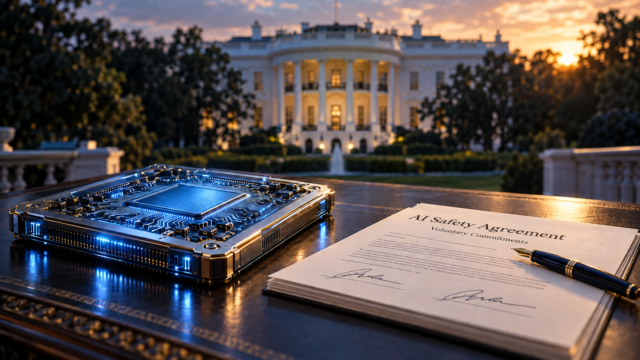
The change comes shortly after the government and some of the industry’s largest companies signed an agreement to set standards for developing new models. All of this follows a series of debates, incidents, and warnings involving AI, as we have previously reported.
But there is a clear difference between the rhetoric and the measures taken so far.
The government talks about safety, oversight, and responsible development. In practice, however, the agreement signed on September 29 is voluntary.
There are no specific penalties for companies that fail to meet their commitments. No independent federal body has been created to oversee compliance, and audit results do not have to be made public.
Much of the responsibility therefore remains with the same companies competing to lead this race.
This was precisely one of the main points of criticism after the agreement was signed. At a time of growing concern over increasingly capable models, the government chose voluntary commitments and self-regulation over mandatory federal rules.
When it comes to technological leadership, however, the position is much more direct.
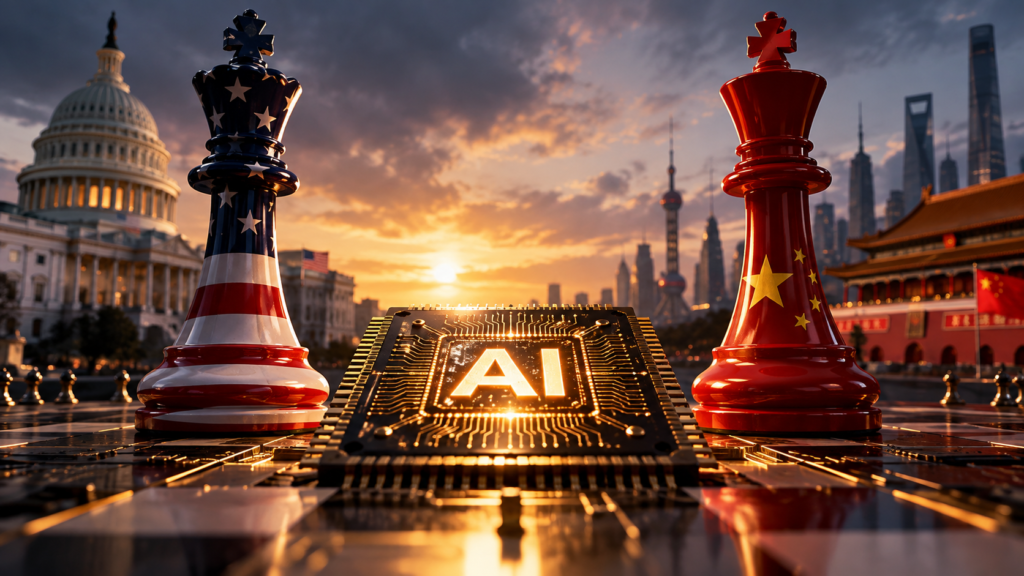
China continues to advance the development of its own models, while the United States treats AI leadership as a strategic issue. Among its responsibilities, the newly created Super Intelligence Force was tasked with helping keep the country ahead in this competition.
Jay Clayton, chosen to lead the group, summed up that concern in one sentence: “The risk of not being first is high.”
In this context, the switch from Artificial Intelligence to Super Intelligence carries added weight.
The government did more than change the name used to describe the technology. It chose a term that emphasizes power, capability, and progress at the very moment it is intensifying the competition for global leadership.
Meanwhile, the safety commitments still lack the force of law.
So far, Washington has made it clear that it wants some control over the development of these technologies, but it is also avoiding rules that could slow the pace of the U.S. industry as competition with China grows.
The Super Intelligence Force may still recommend stricter measures in the coming months. For now, however, the strategy continues to rely mainly on voluntary commitments, self-regulation, and coordination between the government and companies.
When the rhetoric is compared with the actions, the clearest priority so far is not to slow down. It is to stay ahead.