AI Slowdown Debate Grows as U.S.-China Rivalry Intensifies
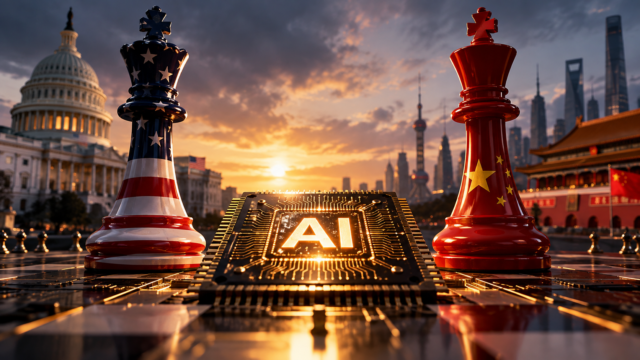
AI leaders warn that development may be moving faster than safety measures can keep up, while U.S.-China rivalry makes a coordinated slowdown difficult.

One of the main arguments for slowing the advancement of AI is the assertion that safety mechanisms may not be evolving fast enough to keep pace with the advancing capabilities of the models. Dario Amodei, CEO of Anthropic, said, “We must slow the pace at which we improve the capabilities of AI models.” According to him, using AI to accelerate the development of the next model has made progress much faster, and this accelerated pace may deprive developers of the ability to understand and control these systems.
Amodei’s conclusion is not that AI development should stop, but that it should proceed only as quickly as developers are able to understand and control AI systems. Sam Altman said he agrees with this approach, as does Elon Musk. Dario Amodei
The Other Side: Trump, Zuckerberg, and Congress
On the other hand, Donald Trump has argued that the United States should preserve its lead over China in artificial intelligence. “We’re leading China in AI … whoever wins AI wins,” Trump told reporters, a position that runs counter to the idea of a coordinated slowdown. Reuters
Mark Zuckerberg, CEO of Meta, takes the same line: in his view, companies already have the incentives and capacity to individually adopt safety measures and adjust the pace of development when necessary, without the need for a formal agreement to slow down development.Reuters
In the U.S. Congress, Mike Johnson, Speaker of the House of Representatives, stated in a September 15, 2026, interview that rushed regulation could cost the U.S. its technological leadership to China. Reuters
The two countries are competing not only for technological and commercial leadership but also for the use of AI in military applications. At the Responsible AI in the Military Domain (REAIM) conference, held in Spain in February 2026, only 35 of the 85 participating countries endorsed the declaration aimed at establishing principles for the responsible use of AI in military applications—the U.S. and China were not among them.Reuters
China Shows Little Interest in Slowing Down
China has not embraced calls for a coordinated slowdown. On the contrary: in a statement, Chinese Minister of State Security Chen Yixin argued that the country needs to accelerate the creation of mechanisms to prevent and control technology-related security risks, and classified AI as a new field of strategic rivalry among major powers. Caixin
Taken together with Beijing’s broader AI policy, the statement suggests a strategy of continuing rapid development while trying to make safety mechanisms keep pace.Reuters
“Machine warfare is coming.”
These positions reflect an intensifying technological competition that is already extending into the military sphere. No one knows for sure where this competition might lead us—but the scenario is already causing concern among international organizations.
Robin Geiss, of the United Nations Institute for Disarmament Research (UNIDIR), warned of the risks posed by the rapid incorporation of artificial intelligence into the military sector. In a lecture at Tsinghua University, Geiss stated that “machine warfare is coming” and described the current international security environment as “dangerous,” citing proliferation pressures, global tensions, a lack of dialogue among major powers regarding nuclear weapons, and AI’s potential to destabilize the system.
Geiss advocated for strengthening international dialogue and governance rules before these technologies advance further in the military sphere. Despite this warning, Geiss acknowledged that countries already agree, in general terms, on some basic principles: that international humanitarian law should apply to AI weapons; that human control over the use of force must be maintained; and that nuclear command-and-control systems must remain entirely beyond the reach of AI.South China Morning Post
An agreement is far from being reached
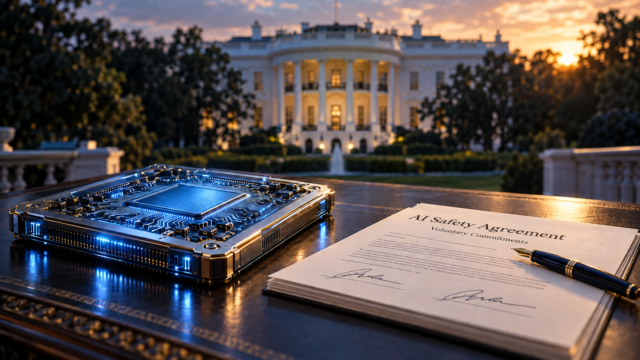
The ideal scenario would be cooperation between countries and technology companies to establish common parameters for developing more advanced AI models, with greater safety and control, thereby reducing risks to the global population. But this scenario is far from becoming a reality.
Ja Ian Chong, a professor at the National University of Singapore and a researcher at Carnegie China, describes the relationship between the two countries as marked by deep mistrust, compares the situation to an arms race, and finds it difficult to imagine a simultaneous reduction in risks on both sides.Internationly
In the same vein, Amodei suggests that AI companies should allow external auditors access comparable to that of employees to verify security practices, incidents, and training processes—as well as coordination among leading companies and between governments to prevent a situation where, while one country slows down, others continue to advance. Even so, Amodei acknowledges that meaningful global coordination will be much harder to achieve and considers a full international pause unlikely in the near term.