AI Stocks Close Lower as CEOs Call for Slower Development
AI stocks closed lower on September 14 as CEOs urged caution. See final Nvidia, AMD and Micron moves and what the safety commitments mean.

Nvidia, AMD and Micron end September 14 in the red as investors reassess AI growth expectations and rising borrowing costs.
AI stocks closed lower on Monday, September 14, after leading industry executives called for a more measured pace of advanced model development. Chipmakers were hit harder than the broader market, with the PHLX semiconductor index falling 5.9%.
Regular-session closing results for September 14 2026
Nvidia (NVDA) -3.37%
AMD (AMD) -4.41%
Micron (MU) -5.25%
S&P 500 -0.48%
Nasdaq Composite -0.56%
Dow Jones Industrial Average -0.29%
Changes are versus the September 11 regular-session close. Stock prices are in U.S. dollars; index levels are in points. After-hours trading is excluded.
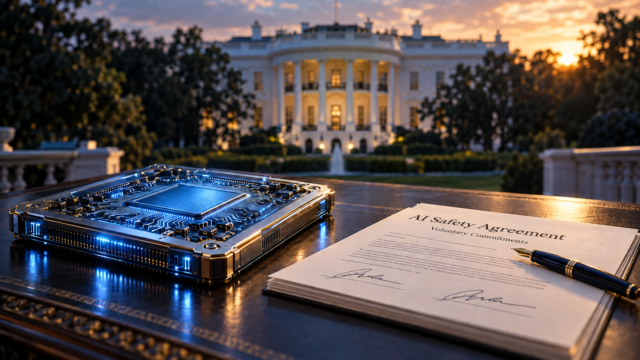
The losses followed a weekend appeal from Anthropic CEO Dario Amodei, who argued that safety research needs more time to keep pace with increasingly capable systems. In his September 12 essay, We Must Pace the Frontier, he wrote: “We must slow the pace at which we improve the capabilities of AI models.” Dario Amodei
His framework combines outside evaluation, coordination among companies in democratic countries and potential international agreements. It allows model training and technical progress to continue while companies strengthen safeguards. Anthropic committed to giving embedded external evaluators ongoing access comparable to that of internal risk-assessment teams.
The implementation status matters: Amodei described inviting those reviewers in the near future. The announcement establishes a commitment, rather than confirming that the new review team is already operating. Broader coordination remains a proposal requiring cooperation beyond Anthropic.
OpenAI CEO Sam Altman supported the initiative and said OpenAI would also provide independent evaluators with employee-like access, with further details to follow. Elon Musk publicly endorsed Amodei’s position. Those statements demonstrate support for greater caution; they do not establish a shared timetable or an industry-wide halt to development.
Altman also ruled out an OpenAI initial public offering in 2026 in remarks published Saturday, pointing to the safety work ahead. That confirms the company’s position on this year’s listing plans. It does not establish a firm IPO date in 2027.
Financing decisions are not moving uniformly across the industry. Reuters reported that Anthropic was continuing toward a public debut and was in talks to bring in Nvidia as an anchor investor. Those reported plans remain distinct from a completed offering or investment agreement. Reuters
For investors, the potential connection is the timing of future spending and earnings. If developing more capable models takes longer, demand for additional training infrastructure and revenue from new products could arrive on a different schedule. This is an interpretation of the financial implications, rather than evidence that chip orders have already been canceled.
Analysts cited by Barron’s cautioned that the calls for restraint had not yet demonstrated a slowdown in AI capital expenditure. That distinction is central to assessing the selloff: expectations can change before companies revise budgets or suppliers report weaker orders. Barron’s
The market also faced pressure from borrowing costs. The 10-year Treasury yield reached 5% during the session, while traders anticipated a Federal Reserve rate increase.
Oil prices gave back part of their earlier rise, helping the broader market finish with more modest losses. Some software shares gained as chip stocks fell, showing that Monday’s reassessment affected different parts of the technology industry differently.
The next evidence to watch is operational: when outside evaluators gain access, whether development schedules change, and whether customers revise spending commitments. Until those changes become measurable, the market’s response reflects uncertainty about the pace of the AI boom more clearly than it establishes a lasting contraction in demand.