Meta’s New VR Glasses Weigh 100 Grams. That’s Not the Interesting Part
Meta's new VR Glasses weigh 100 grams and let you keep your desk in view while you work. Here's what the specs reveal — and what Meta isn't saying yet about battery life.
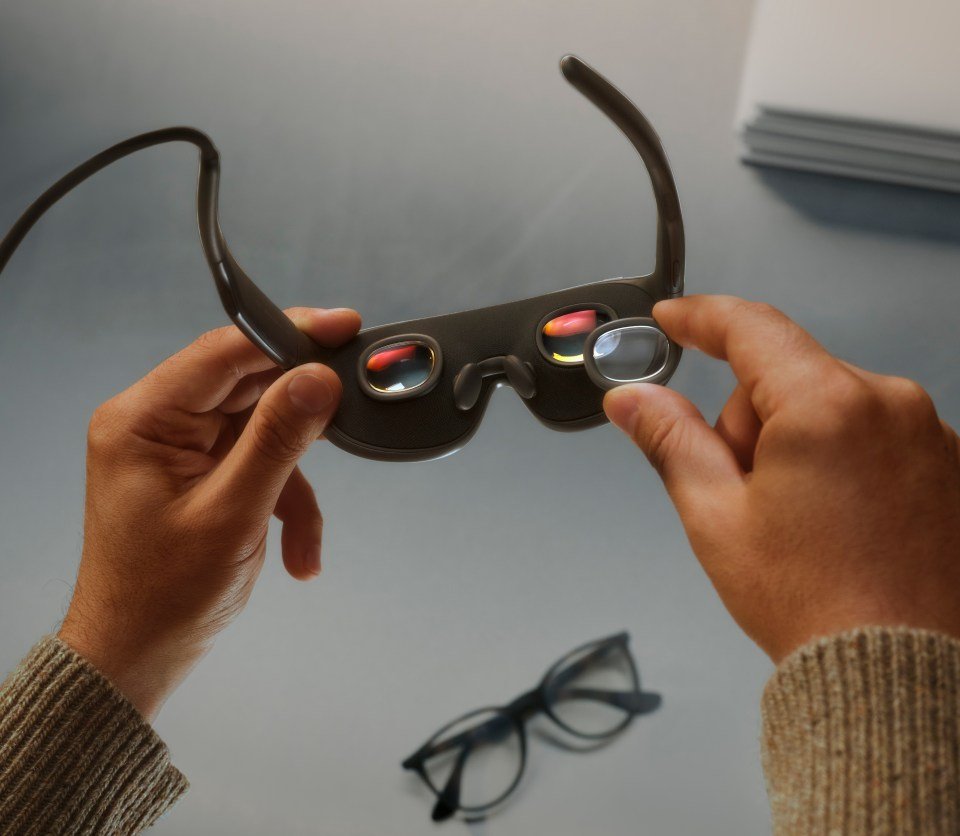
Try working with a virtual monitor on a plane, and you’ll hit the same wall every time: the moment you need your phone, or a coffee, or just want to see what’s on the tray table, the headset gets in the way. Meta thinks it has solved that. Its new VR Glasses, unveiled September 23 at Connect, are built to keep the outside world visible while several virtual screens float in front of you.
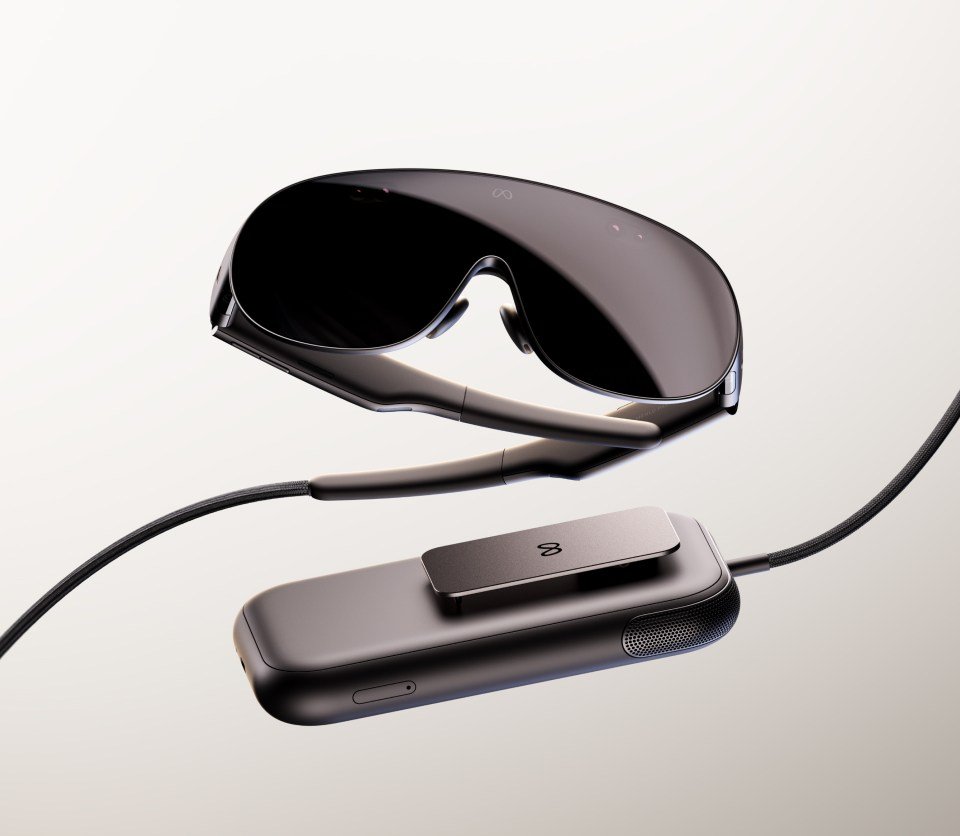
At about 100 grams, a fifth the weight of a Quest 3, according to Meta, the trick is offloading everything heavy. Battery, processor, and storage: all of it lives in a separate puck that clips to a pocket or a bag, tethered to the glasses by a thin cable.
Your Desk Stays in View
The workspace pitch is where things get genuinely interesting. Open one big virtual screen, or several, and use any flat surface as a keyboard and touchpad. Cameras feed you a full-color view of your actual desk and phone; the open-sided design means you’re not sealed off from the room. Navigation runs on eye tracking and hand gestures, no controllers.
That last detail matters more than it sounds. A “portable office” that forces you to rip off your headset every time you reach for your keys isn’t actually portable, it’s a party trick. Meta seems to get this. Whether tapping on a café table feels good for eight straight hours is a different question, and no press release can answer it for you.
The Screen Is Sharp. The Battery Life Is a Question Mark.
Under the hood, the glasses use micro-OLED panels in what Meta calls a 5K Infinite Display, running 37 pixels per degree, sharp enough, on paper, to make a spreadsheet readable instead of just watchable. Battery life is where Meta gets vague: the puck is rated for three hours of continuous high-resolution video, but there’s no number for how long an actual multi-screen workday lasts.
There’s a trade-off buried in the smaller design, too. Developer documentation lists the field of view at roughly 70 by 66 degrees, well down from the Quest 3’s 110 by 96. Meta frames that as the price of sharper text, a fair trade for reading email, a rougher one if you were hoping to game in these. Try before you buy, if you can.
Meta VR Glasses ship spring 2027, starting at $1,299.99. The bet is narrow but real: that VR stops feeling like a gimmick the moment you can glance down at your actual phone without taking anything off your face. Meta’s announcement